On most Mondays, the planning room looks the same: sales updates on one screen, market notes on another, and a dozen opinions about what the next quarter might bring. What has changed in the last year is this, teams that use AI well walk in with clearer numbers, tighter scenarios, and quicker decisions.
AI strategy, defined
Use AI in a structured way to turn the data you already have (and what is outside your walls) into timely, usable insight. Not for fancy dashboards, but for everyday calls, forecasts, scenarios, resource allocation, and market entry. The payoff is early action, less guessing, and more confidence.
The work that gets easier
A. Forecasts that update themselves
Demand by product, channel movement, and regional growth refresh as new data comes in. Planners spend less time cleaning sheets and more time shaping the plan.
B. "What-if" before "we will"
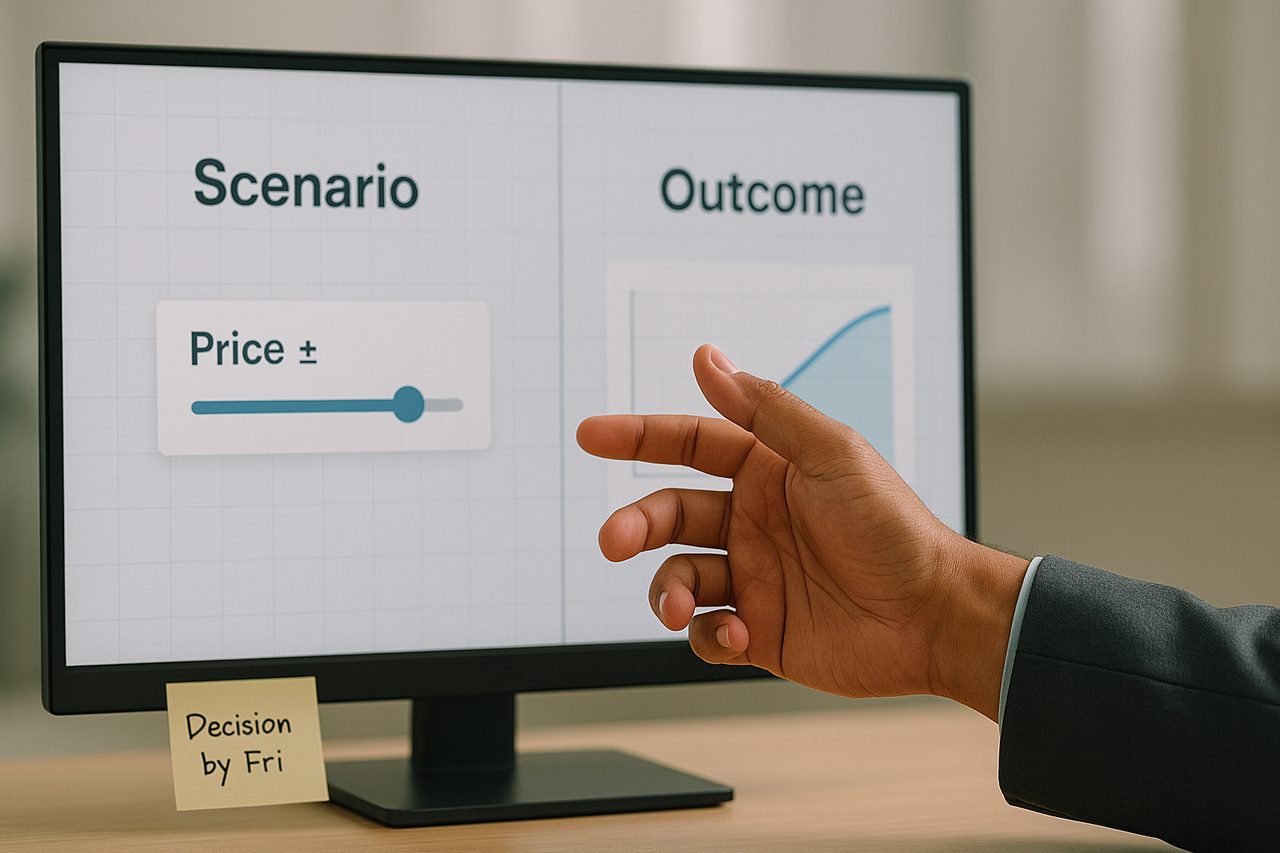
Try out product launches, price moves, and mix changes on a model first. See the impact on volume, margin, and supply risk before you commit.
C. Competitive signals in one place
Track new brand activity, field movement, and digital buzz together. Small signals that were easy to miss now add up to a clear picture.
D. Field + digital stitched together
See how call quality and digital engagement move your brand KPIs. Brand planning and SFE reviews get sharper, and shorter.
E. Smarter bets on where to invest
Heatmaps point to the territories and segments with the best odds with the best odds. You move early, before competitors do.
The outcome of this is better resource planning across people, products, and promotions; more accurate calls in the review room; and a steadier course when the market turns.
Impact across teams
Sales: cleaner targeting and sharper call plans, so likely prescribers are easier to spot.
Marketing: more relevant content and tighter timing, with results measured the same week.
Strategic planning: rolling forecasts and tested scenarios, so pivots happen early.
Signs you are doing it right
1. One view everyone trusts
A simple weekly page: what moved, why it moved, and what we will do next. No hunting for numbers. No "version wars."
2. Rolling forecasts
Targets adjust with new reality, no drama, fewer stock-outs, fewer end-month scrambles.
3. Scenario first, decision next
Before you freeze a plan, you have already seen the effect of price, launch timing, or supply risk by BU, territory, and channel.
4. Clear guardrails
Assumptions and sources are visible. Claims stay within policy. The team can explain every recommendation in two lines.
A simple way to begin
Step 1: Pick two use cases
Choose one "now" problem (e.g., demand forecast) and one "next" problem (e.g., territory investment view). Write success in one sentence each.
Step 2: Wire up the basics
Use the data you already have. Keep the model simple. Get a first cut in front of the planning lead and one business head.
Step 3: Run a live cycle
Use the output in an actual review. Note what helped, what confused, and what was missing. Fix only the top three issues.
Step 4: Lock the routine
Make it a weekly habit: fresh forecast, one scenario, one decision. Add a short training so planners and PMT can run it themselves.
An illustrative example
A mid-size company planning a diabetes launch kept missing early signals from two Tier-2 clusters. After stitching secondary sales, patient footfall, and fieldwork insights, the model flagged those clusters as high potential. The team moved two reps and two small CME spends there. Within eight weeks, new prescribers grew faster in those pins than in the rest of the state. Nothing flashy, just earlier, clearer insight.
The ImpactPlus way
Keep it practical: start with the jobs your team already does, keep humans in charge, make every output explainable, and measure what matters: cycle time, accuracy, and lift in the decisions taken.
If you want to see this on your data (sanitized), we can set up two use cases and run them live with your strategic planning team in one quarter.